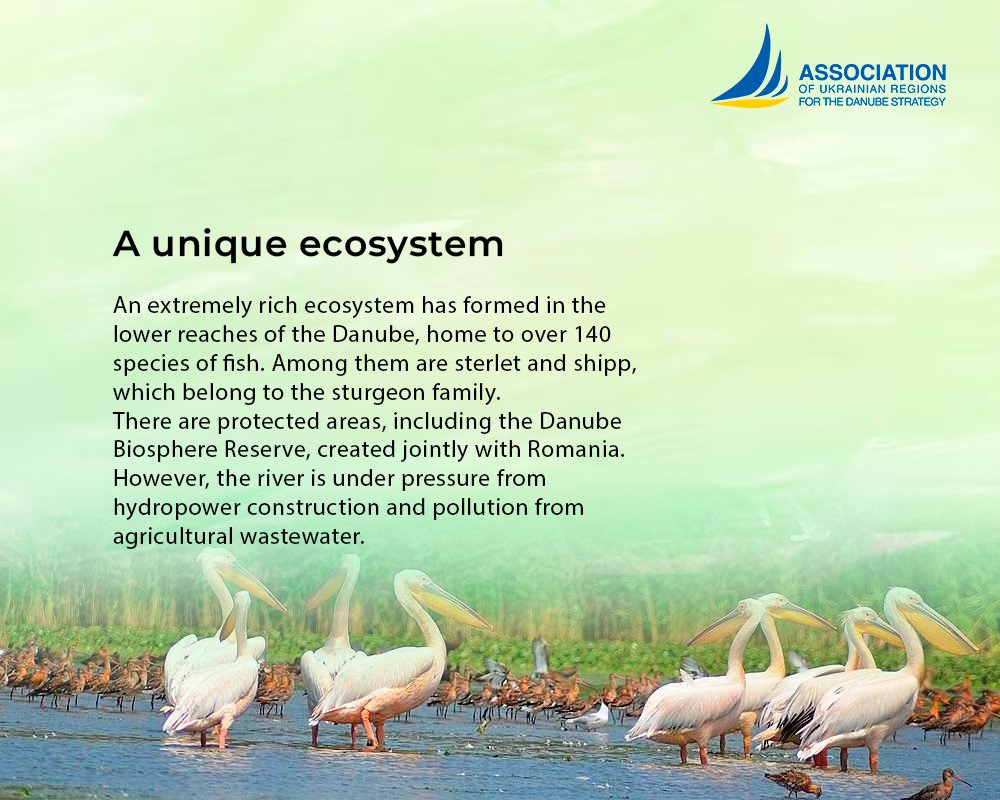
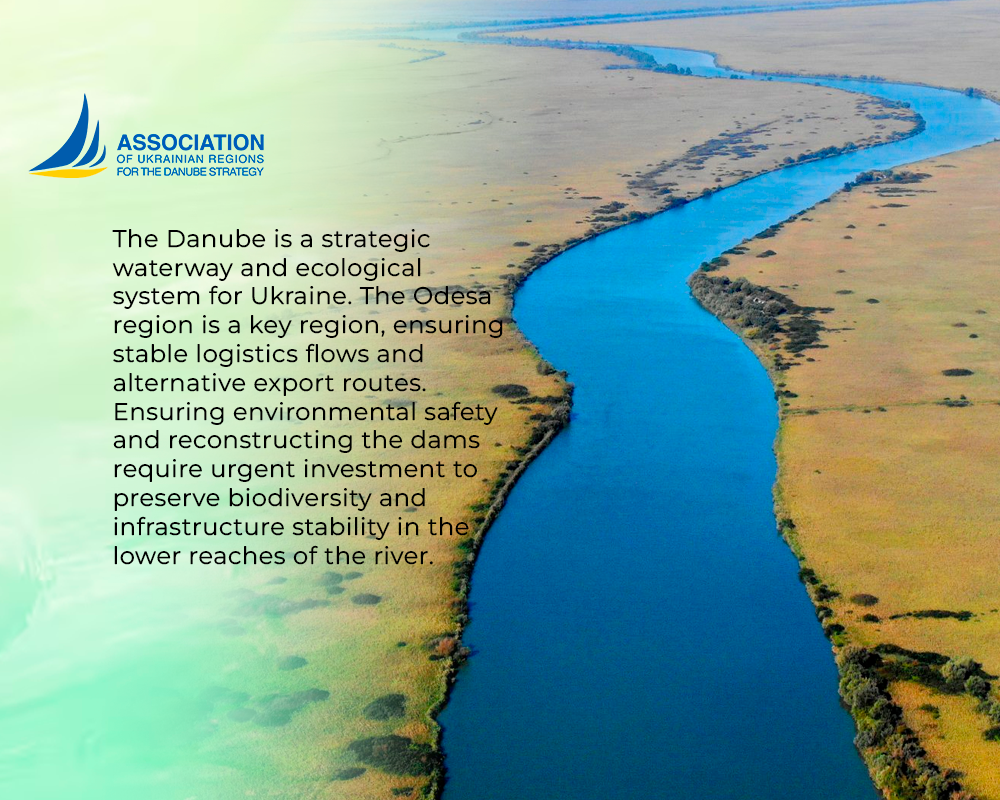
The Danube is the second-longest river in Europe (2,860 km), flowing through ten countries — from Germany to Ukraine, where it empties into the Black Sea. Its basin covers an area of over 800,000 km², forming a unique ecosystem with more than 140 species of fish, numerous wetlands, and rare sturgeons.
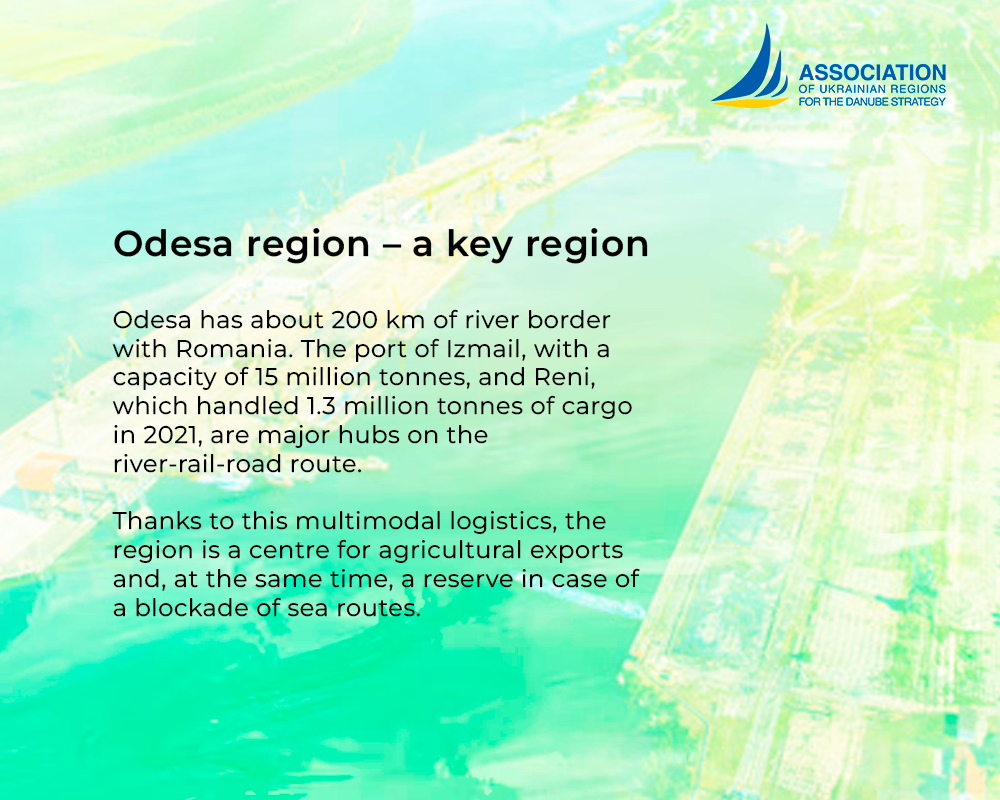
For Ukraine, the Danube is a key transport corridor bypassing the blocked Black Sea, a backup route for agricultural exports, and a source of fresh water. The Odesa region, located in the river’s lower course, serves as a gateway to Europe: the ports of Izmail and Reni are operating here, supporting logistics during wartime and ensuring strategic mobility and the region’s economic resilience.
However, the region’s current economic condition is marked by systemic challenges spanning hydrotechnical infrastructure, water management, drinking water supply, ecological balance, agricultural productivity, and socio-demographic stability. These issues are interrelated and stem from chronic underfunding, fragmented governance, and a lack of integrated strategic planning.
In particular, hydrotechnical facilities are in critical condition due to fragmented ownership across different agencies and the absence of clear funding or responsible entities for maintenance, leading to increased flood risks. Drinking water systems, despite modern facilities like the Kiliia water treatment plant, operate inefficiently due to the lack of distribution networks to consumers. The ecological balance of the Danube and its adjacent limans has been disrupted by uncoordinated actions and poor governance, resulting in salinization and ecosystem degradation. The agricultural sector of Bessarabia shows significantly lower yields due to underdeveloped irrigation and lack of modern technologies.