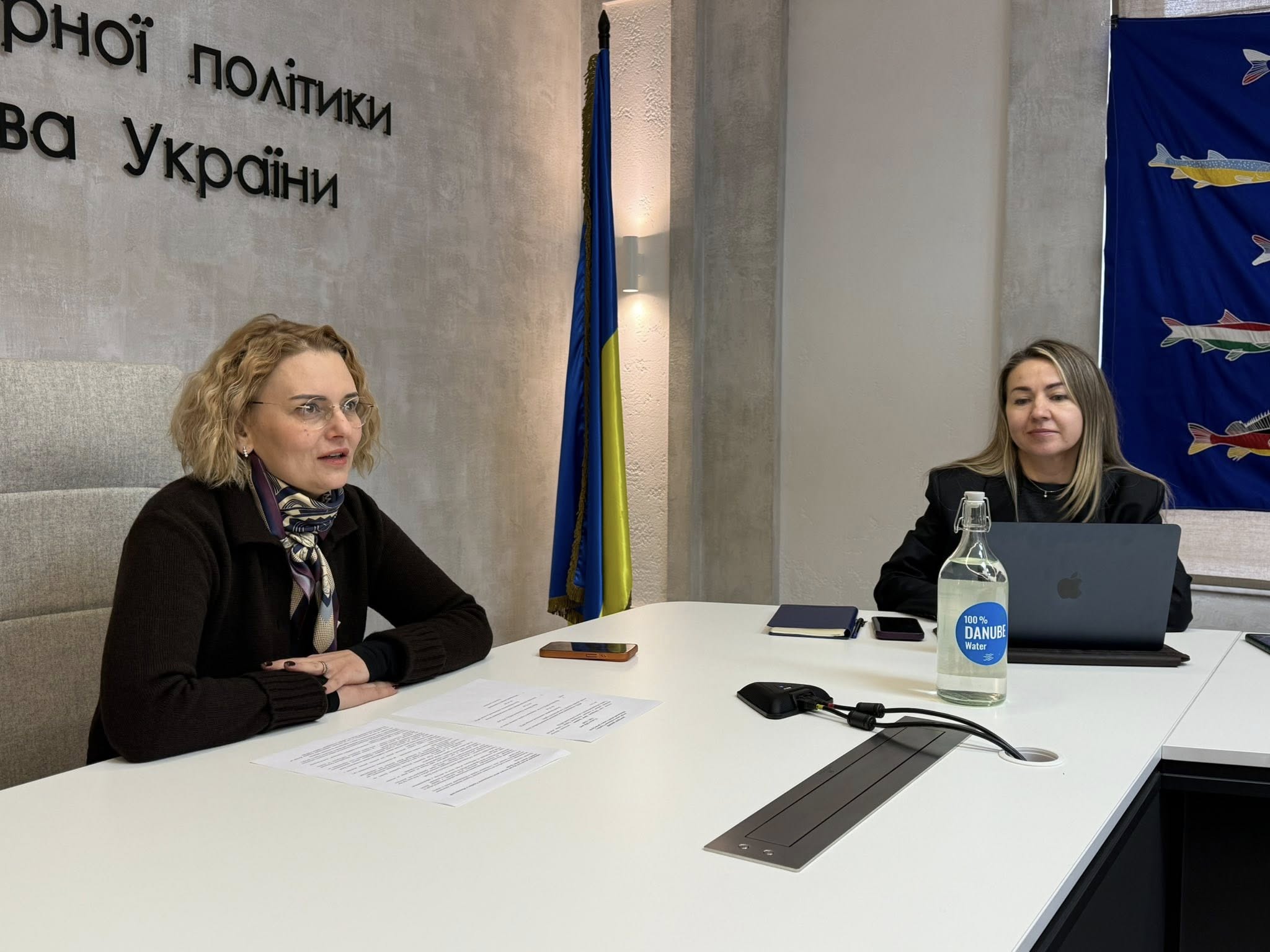
Within the framework of Ukraine’s work in the International Commission for the Protection of the Danube River (ICPDR), we are consistently shaping our position on Danube River Basin management and adaptation to climate challenges. Today’s meeting on Ukraine’s participation in the ICPDR went far beyond a formal protocol event. In fact, it marked a moment of strategic choice, when international water policy moves into the realm of concrete national decisions capable of shaping macro-regional development for years ahead.
To understand the context: the ICPDR is the key arbiter and coordinator that sets the “rules of the game” for all countries of the Danube River Basin. It is here that the Danube River Basin Management Plan and the Danube Flood Risk Management Plan are adopted. In essence, this is Europe’s water constitution, defining where investments will go, how navigation will develop, and how countries will respond to climate change. For Ukraine, being present here means directly influencing the architecture of decisions.
Key priorities of this cooperation were outlined by Yuriy Maslov, President of the Association “EU Strategy for the Danube Region” and Head of the Lower Danube Basin Council. According to him, it is essential that the Ukrainian voice is not merely optional but serves as a foundation for joint approaches and project decisions. The Basin Council acts as the bridge that maintains daily coordination between the state, local communities, and the real economy of the region.
Yuriy Maslov emphasizes that for Ukraine, the issue of water availability and hydrological resilience of the Lower Danube has acquired existential importance. This goes far beyond simply complying with environmental directives or receiving a “checkmark” from Brussels. It concerns Ukraine’s strategic resilience and the functioning of our river cluster as an irreplaceable logistics route. In this context, water diplomacy becomes a direct element of national security, as it concerns the viability of an entire region under wartime conditions.
“It is important that the ICPDR agenda for 2026 includes both drought resilience and the assessment of the impacts of the war on the Lower Danube and the Danube Delta. These are areas where Ukraine has full moral and political grounds to shape the substance rather than act as a bystander,” Yuriy Maslov stressed.
European integration in this context requires the real implementation of European water policy. EU programs for the Danube Region open access to financial instruments and technologies, but we will only be able to use them under conditions of strong subjectivity and ownership. We have a unique opportunity to transform water diplomacy into a driver of strategic development for the Ukrainian Danube region, moving from declarations to pragmatic, firm, and nationally beneficial decisions.